
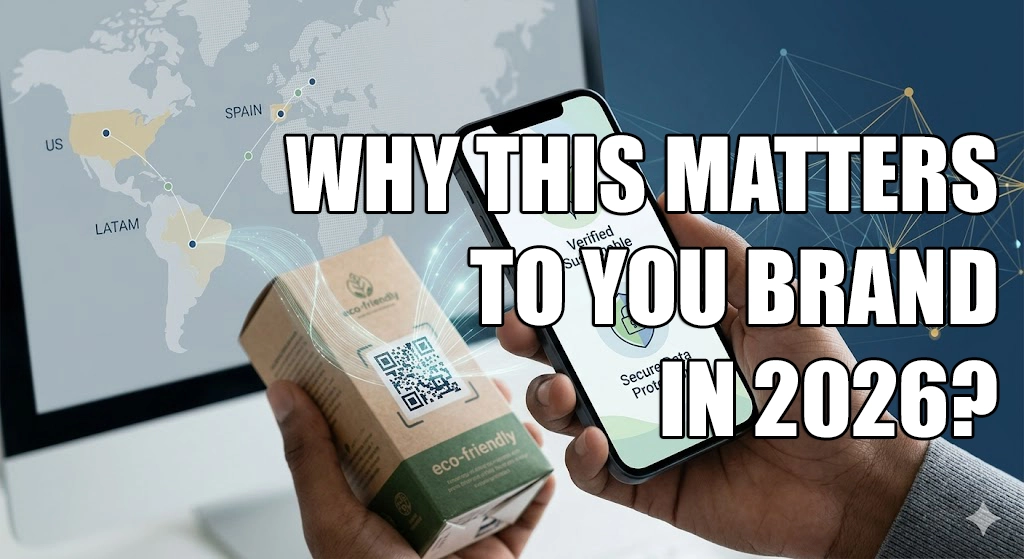
In the first half of 2026, consumer trust is no longer earned through price alone. At StatMark Research, we observe that loyalty now rests on two pillars that once seemed distant: how a company cares for the planet and what it truly does with its customers’ personal information.
Sustainability: More Than “Going Green,” It’s Being Transparent
Today, consumers in Spain and Latin America don’t just want to know if a product is eco-friendly; they want traceability. This means being able to track a product’s journey from the factory to their doorstep. Brands demonstrating honesty in their supply chain are achieving a stronger emotional connection, especially in a market where “greenwashing” no longer works.
The New Privacy Rule: Ask for Permission, Not Forgiveness
Data management has changed. With the end of intrusive online tracking methods, Zero-Party Data has emerged.
What does this mean?
It is information that the customer gives us voluntarily because they trust us (for example, their preferences or important dates) in exchange for a service that truly adds value. In 2026, privacy is not an obstacle; it is a competitive advantage.
Differences Based on Consumer Location:
- Spain: The focus is on compliance with strict environmental regulations. Companies are required to report their impact.
- United States (Hispanic Market): Consumers seek personal well-being coupled with the planet’s health. Customers reward brands that care for their health and the environment.
- Venezuela and the Caribbean: Here, sustainability translates into efficiency. Consumers value companies that do not waste resources and support the local economy to become more resilient.
Conclusion: The Ethical Commitment
Sustainability in 2026 is the commitment to use technology not just to sell, but to protect the customer’s identity and the environment. Companies that achieve this balance will dominate the market in the second half of the year.
Reader’s Glossary (The StatMark “Pedagogy”)
To help contextualize these modern terms, we have prepared this brief guide:
Traceability: The ability to follow the “footprint” of a product from its origin until it reaches the final consumer. It allows us to know if ethical and environmental standards were truly respected.
Zero-Party Data (Direct Source Data): Information that a customer intentionally and proactively shares with a brand. It is not something the brand “spies” on, but something the user “hands over” to receive a better experience.
Resilience: In a business context, the ability of a company or market to adapt and recover quickly from difficult situations or unexpected changes.
Digital Carbon Footprint: The environmental impact (greenhouse gas emissions) produced by the use of technology, servers, and the internet.
