
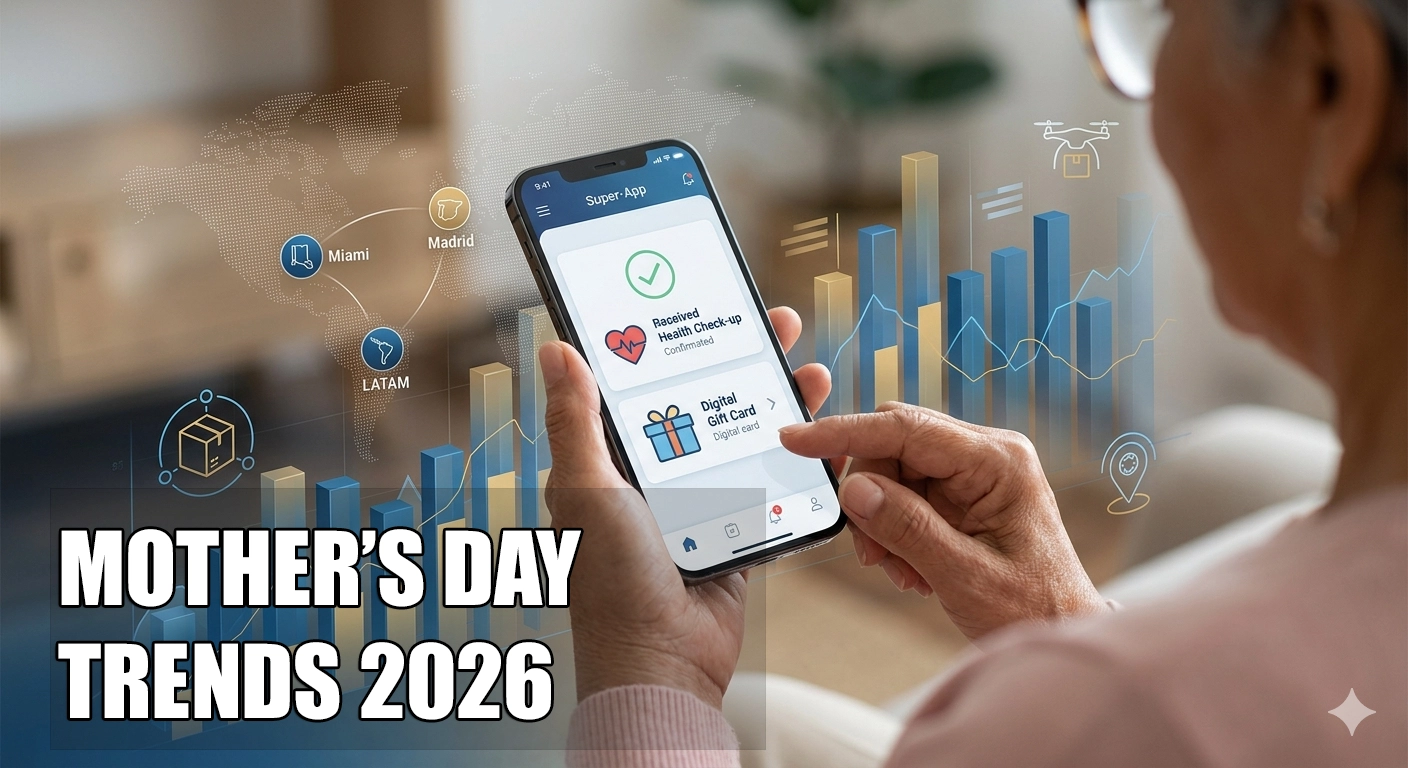
On the 2026 commercial horizon, Mother’s Day solidifies its position not only as a cultural festivity but as a macroeconomic engine mobilizing over 500 million Spanish speakers. For StatMark Research, this phenomenon represents the epitome of cross-border commerce, where geographical borders dissolve before the digitalization of services and the strength of “remittances of affection.”
The Rise of Cross-Border Commerce: The Gift That Crosses Oceans
By 2026, capital flow from key nodes such as Madrid, Miami, and New York toward Latin America has evolved. It is no longer just about sending money; the diaspora consumer prefers the “Direct Destination Gift.”
- Healthcare Services as a Product: In countries like Venezuela, Ecuador, and El Salvador, physical gifts are being displaced by peace of mind. Children abroad are contracting telemedicine plans, international health insurance, and preventive check-ups for their mothers, paid in dollars or euros and executed locally.
- Fintech and Super-Apps: The integration of global payment gateways allows a user in Madrid to purchase on a local marketplace in Caracas or Bogotá with minimal friction, increasing the Average Ticket of these transactions by 18% year-over-year.
- Digital and Reverse Logistics: The rise of digital gift cards and premium subscriptions (streaming, wellness, education) represents 30% of cross-border sales volume for this date.
Regional Segmentation: Experiences vs. Technological Utility
Purchasing behavior for Mother’s Day 2026 reveals a strategic gap based on market maturity and economic stability.
Spain: The Triumph of the “Experience Economy”
With a highly mature digital market, the Spanish consumer prioritizes emotional ROI.
- Trend: A surge in bookings for short-haul travel, luxury spas, and signature gastronomy.
- Insight: The Spanish mother of 2026 values time and disconnection. Brands offering personalized “experience packs” through Generative AI lead in Market Share.
US Hispanic: Technology and Status Quo
The US Hispanic market remains the one with the highest purchasing power, acting as a bridge between two worlds.
- Trend: Dominance of Consumer Technology (Wearables) and High-End Personal Care. Hispanic children in the US see the gift as an investment in their mothers’ well-being and connectivity.
- Channel: Retail Media on platforms like Amazon and Walmart is decisive, with an aggressive focus on “Next-Day Delivery” campaigns for shipments within the US and toward LATAM.
Venezuela and LATAM: The Gift as a “Well-being Good”
In markets with high resilience and inflation, consumption becomes pragmatic yet sophisticated.
- Trend: “Personal Care” translates into premium beauty products acting as affordable little luxuries, alongside mid-to-high-end mobile devices facilitating communication with the diaspora.
- Key Factor: Brand trust and guaranteed “last-mile” delivery are more important than the final price.
Consumer Insights: What Does the Hispanic Consumer Feel and Buy?
StatMark Research’s analysis identifies three psychological pillars in the 2026 buyer:
- Guilt Mitigation: Especially in the diaspora (Miami/Madrid). High spending on digital gifts or health services functions as a compensation mechanism for physical absence.
- The Value of “Recovered Time”: In Spain, the consumer flees from objects and seeks memories. Marketing must sell “moments,” not “products.”
- Security and Reliability: The buyer in LATAM fears logistical inefficiency. Brands guaranteeing the fulfillment of the delivery promise capture customer loyalty (LTV).
Transversal Vision: The Unification of the Market of Affection
The great opportunity for retailers and global brands in 2026 lies in understanding that the Hispanic market is a circular ecosystem. A son in Miami influences the consumption of a mother in Valencia (Venezuela) or Seville (Spain).
- Global Omnichannel Strategy: Brands must allow the transaction to occur in the sender’s currency (USD/EUR) but ensure the value is delivered with the receiver’s warmth and cultural context.
- Cross-Border Retail Media: Advertising must be segmented not only by where the buyer resides but by the gift’s destination. A campaign in Miami may be selling luxury dinners in Buenos Aires.
Conclusion for C-Levels: Mother’s Day 2026 is not a local campaign; it is a global logistical and financial operation. Companies that succeed in connecting the payment capacity of the north with the well-being and affection needs of the south will dominate the Hispanic market of the future.
